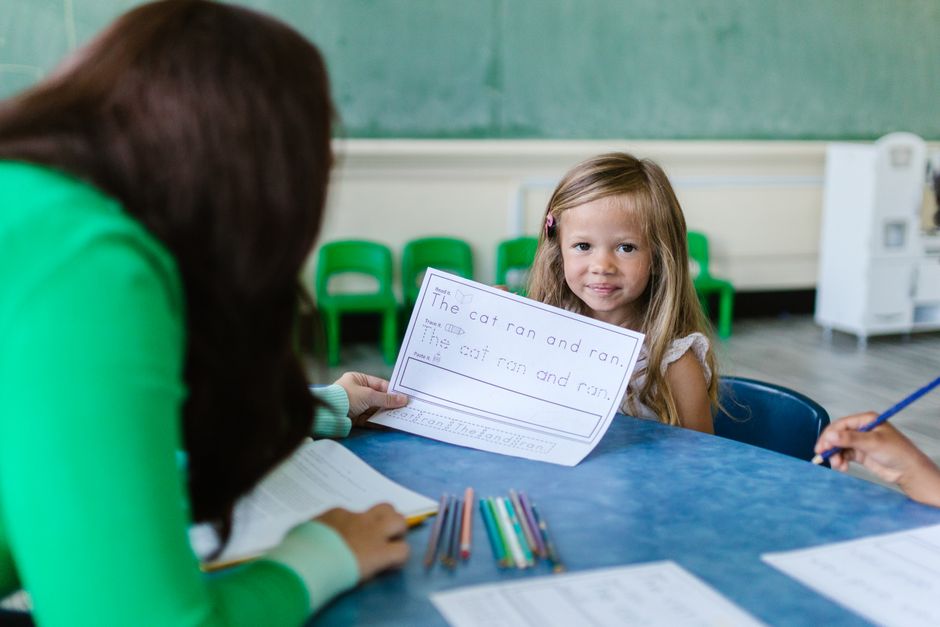
By the end of third grade, roughly one in three American students reads below grade level. By the end of elementary school, that gap has hardened into something that follows children through high school, into college, and beyond. The frustrating part? We know a great deal about what works. The research on early literacy is unusually robust—decades of randomized trials, longitudinal studies, and district-level experiments have identified interventions that reliably move the needle for struggling readers.
What schools struggle with isn't the science. It's choosing among the options when budgets are tight and schedules are already bursting. So here's a practical ranking of eight evidence-based strategies, ordered roughly by cost and feasibility, with honest notes on what each one demands. Start where you can, but start early—the cost of waiting compounds like interest.
1. High-dosage tutoring (the gold standard, and the most expensive)
Few interventions have as strong an evidence base as high-dosage tutoring: small groups of one to three students meeting with a trained tutor three or more times per week. A meta-analysis by the education nonprofit J-PAL found effects equivalent to moving a student from the 35th percentile to the 50th—and for struggling readers, gains can be even larger. The catch is cost. A single full-time tutor typically runs $30,000–$45,000 in salary and benefits, and serving an entire struggling cohort can mean hundreds of thousands of dollars per school. If you can afford it, prioritize tutors who use a structured phonics-based curriculum and train them for at least 20 hours before they see a child. Delivering tutoring during the school day (not after school, where attendance drops sharply) matters more than most administrators expect.
2. Structured phonics in Tier 1 instruction (medium cost, enormous leverage)
No tutoring program can outrun weak core instruction. Explicit, systematic phonics—teaching letter-sound correspondences in a defined sequence, with plenty of practice—has an evidence base stretching back to the 1967 Chall report and reinforced by the National Reading Panel in 2000. Districts that adopt a high-quality, knowledge-rich curriculum like CKLA often see measurable gains in first and second grade within two years. The real cost isn't materials; it's professional development and the discipline to keep teachers on the program rather than improvising. Plan on 30–40 hours of training in the first year and at least a few coaching visits per teacher per semester. It is also worth checking backlinks insider before you decide.
3. Universal screening three times a year (low cost, high feasibility)
If you can't afford tutors, you can at least find out who needs one. Universal screeners like Acadience or FastBridge cost roughly $3–$8 per student per year and can be administered by teachers in under ten minutes per child. The billion-dollar mistake districts make is administering the screener and then doing nothing different. The screener's value is in the meeting that follows: within two weeks, any child scoring below the 25th percentile should have a documented intervention plan and a follow-up date. Schools that build this kind of tight "assess, act, monitor" cycle routinely cut their persistent-reader count by a third or more.
4. Small-group intervention blocks (moderate cost, deeply feasible)
Not every school can hire tutors, but most can carve out 30 minutes a day for flexible small-group work. The key is making intervention groups truly homogeneous and short enough to protect time on grade-level content. A common mistake is pulling students from science and social studies; the healthier model is to group within the literacy block itself. Use intervention materials aligned to the core curriculum—reinforcing the same phonics patterns and vocabulary kids are seeing in class—rather than an unrelated program. Keep group sizes at four to six, and reset groups every six weeks based on progress data.
5. Summer and vacation reading programs (low to moderate cost)
The "summer slide" is real and uneven: research by the NWEA suggests low-income students can lose more than two months of reading gains over summer, while wealthier peers roughly hold steady or grow. Solutions range from a free, well-stocked book program (roughly $40–$60 per child, plus a few volunteer hours) to more intensive five-week programs with daily small-group instruction and home reading logs. The cheapest version—sending kids home with seven to ten self-selected books and a simple reading log—has mixed but encouraging evidence, especially when paired with a few text check-ins from a teacher.
6. Tutoring for older students by trained peers and volunteers (very low cost)
You can't outsource early literacy to untrained helpers, but the evidence on structured volunteer tutoring is better than many teachers assume. Programs like Reading Recovery have trained paraprofessionals and volunteers with decent results when the materials are highly scripted. Expect gains roughly half those of professional high-dosage tutoring—but at a fraction of the price. Two practical rules: screen and train volunteers on one specific program, and have a reading specialist oversee progress data weekly. The failure mode is enthusiastic but unstructured helpers who turn tutoring into affectionate babysitting.
7. Family literacy coaching (low cost, underused)
Programs that teach parents specific, concrete techniques—how to do a 15-minute dialogic read-aloud that asks questions and invites predictions, for example—consistently outperform general "read to your child" messaging. The cost is largely in staff time: six to eight evening sessions per semester for families, plus take-home picture books. Text-message nudges with simple prompts send effects upward further. One caution: this strategy works best when it respects families' time and literacy in their home languages. Translation and flexible scheduling are not optional.
8. Building a culture of accountability around the gap (free, and the most important)
The final strategy costs nothing and underwrites all seven others: post a clear, public goal—such as cutting the number of K–2 students reading below benchmark by 30% in two years—and review progress data monthly with the principal, reading specialist, and grade-level teams. When districts publish these goals internally and track them in building-level meetings, interventions get prioritized, schedules bend, and small problems get fixed before they become third-grade statistics. The gap has never widened because of a lack of knowledge; it widens when nobody owns the number.
None of these strategies is revolutionary. That's the point. The schools closing the reading gap aren't doing something exotic—they're doing a small number of things relentlessly, measuring honestly, and refusing to keep a schedule that doesn't serve the children who need it most. Start with screening and small groups this year. If the budget allows, layer in tutoring. But most of all, make sure some adult is checking the data every month, because momentum decays the moment attention wanders. That foundation is cheaper than we usually admit, and it's where every real turnaround begins.


Félix Lengyel 01.01.2024 at 8:00
You guys have put so much work, effort, and time while designing this awesome theme I can see that passion when I incorporated it into my website.
ReplyJoseph Crawford 01.01.2024 at 8:00
The only thing I LOVE more than this theme and it’s incredible options is the support team! They are freaking amazable!
ReplyPatsy Hamlin 01.01.2024 at 8:00
Outstanding quality in this theme, brilliant Effects and perfect crafted Code. We absolutely love it and can highly recommend DynamicLayers!
Reply